
Reflections with NBOME President John R. Gimpel, DO, MEd
The NBOME is saddened to learn of the passing of osteopathic leader and civil rights champion William G. Anderson, DO, on August 16. One of NBOME’s most influential Board members in its 92-year history, Anderson was always quick to remind us that he was older than the NBOME. He passed away at the age of 98. Anderson was a tireless advocate for equality, justice, and the osteopathic medical profession.
NBOME President and CEO John R. Gimpel, DO, MEd, maintained a decades-long friendship with Anderson. Their conversations often returned to the philosophy that sustained Anderson through some of his most difficult endeavors.
“Particularly in his final years, as he was reflecting on his life, Bill would remind us that God always has a plan,” Gimpel said. “That plan for each of us is to find a way to serve others, to make a difference, and to be ready when the call to serve comes. Bill would say, ‘Look back at your life and ask yourself: what did you do to help?’ And making a difference is exactly what he did for almost 99 years.”
Born in Americus, Georgia, in 1927, Anderson attended Des Moines University College of Osteopathic Medicine. “That was part of God’s plan, Bill told me,” Gimpel recalled. “Because how else would he have just happened to be born into a family whose father was close friends with the only Black osteopathic physician in Georgia, a DMU graduate?” Returning to Albany, Georgia, in 1957, Anderson encountered some injustices in his efforts to treat patients. In response—and choosing to lead when encountering other social injustices—he founded and became the first president of the Albany Movement, which worked to register Black voters and end racial segregation. It was there that he first partnered with Dr. Martin Luther King, Jr. and the Reverend Ralph David Abernathy. “Bill would say, meeting these two icons and responding to the call to serve was also divine intervention,” Gimpel said.
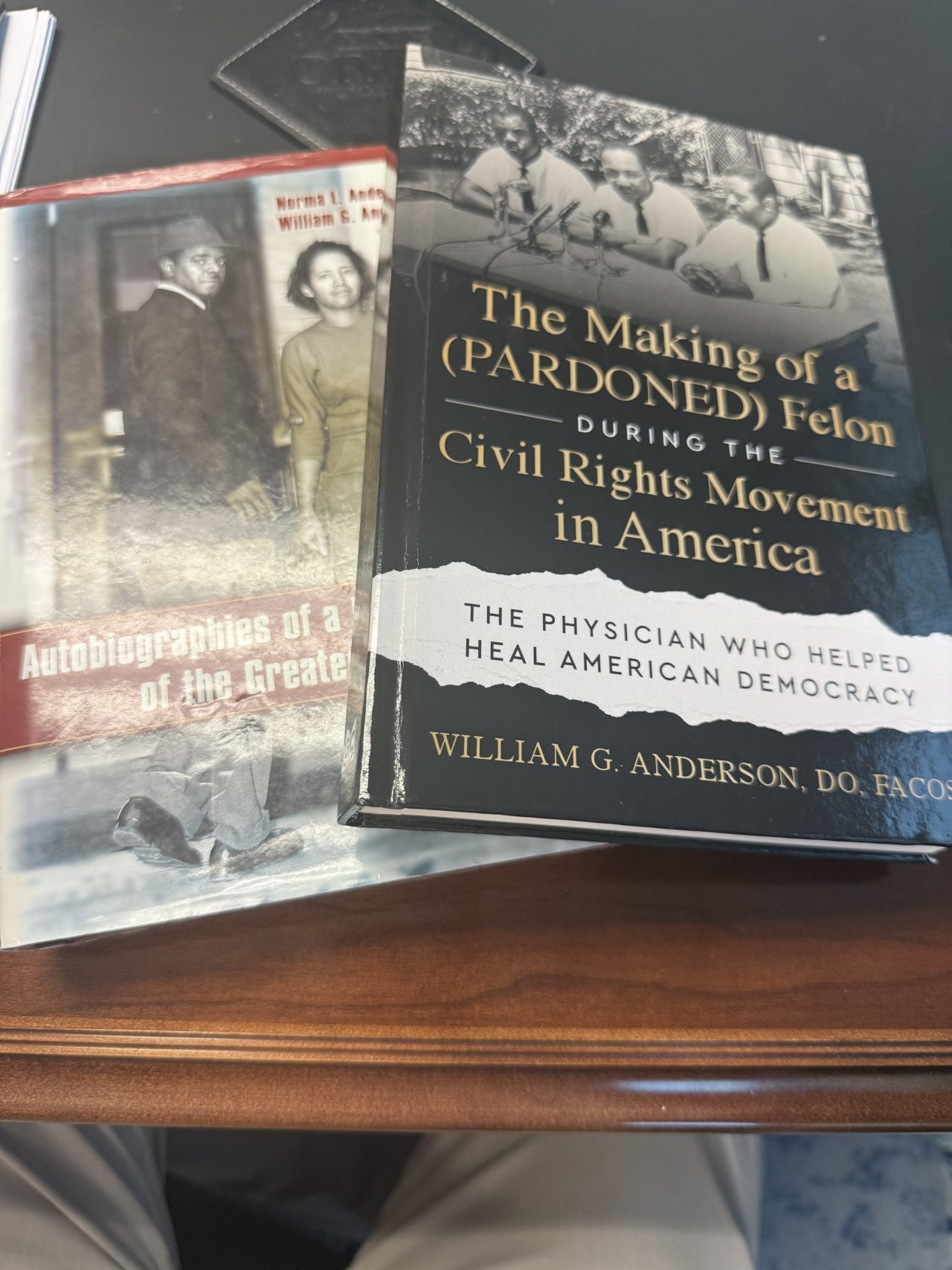
“When Bill pursued surgical training in Detroit, he again faced discrimination— this time because the hospital had not previously had a Black physician,” Gimpel said. “He had to first prove himself by working overnight shifts as a house physician.” Anderson’s career as a civil rights leader is well chronicled in his two inspiring autobiographical books, including the 2025 publication, The Making of a (PARDONED) Felon During the Civil Rights Movement in America.
While focusing on his family and his surgical practice in Michigan, Anderson became active in service to the osteopathic medical profession. He served locally in his home state of Michigan, with the newly founded Michigan State University College of Osteopathic Medicine (MSU-COM), the Michigan Osteopathic Association, and as a delegate to the American Osteopathic Association (AOA). His faculty roles at MSU-COM would continue into his nineties. He was elected to the AOA Board of Trustees and later served as AOA’s President (1994-1995). It was at this time that Anderson began working with NBOME leaders on important issues related to the osteopathic medical profession and licensure, and he set his sights on getting further involved. “I met Bill when he was AOA President, and I was a (very young) NBOME Board member,” Gimpel recalled. “We bonded instantly, and I later told him that, for me, this was divine intervention.”
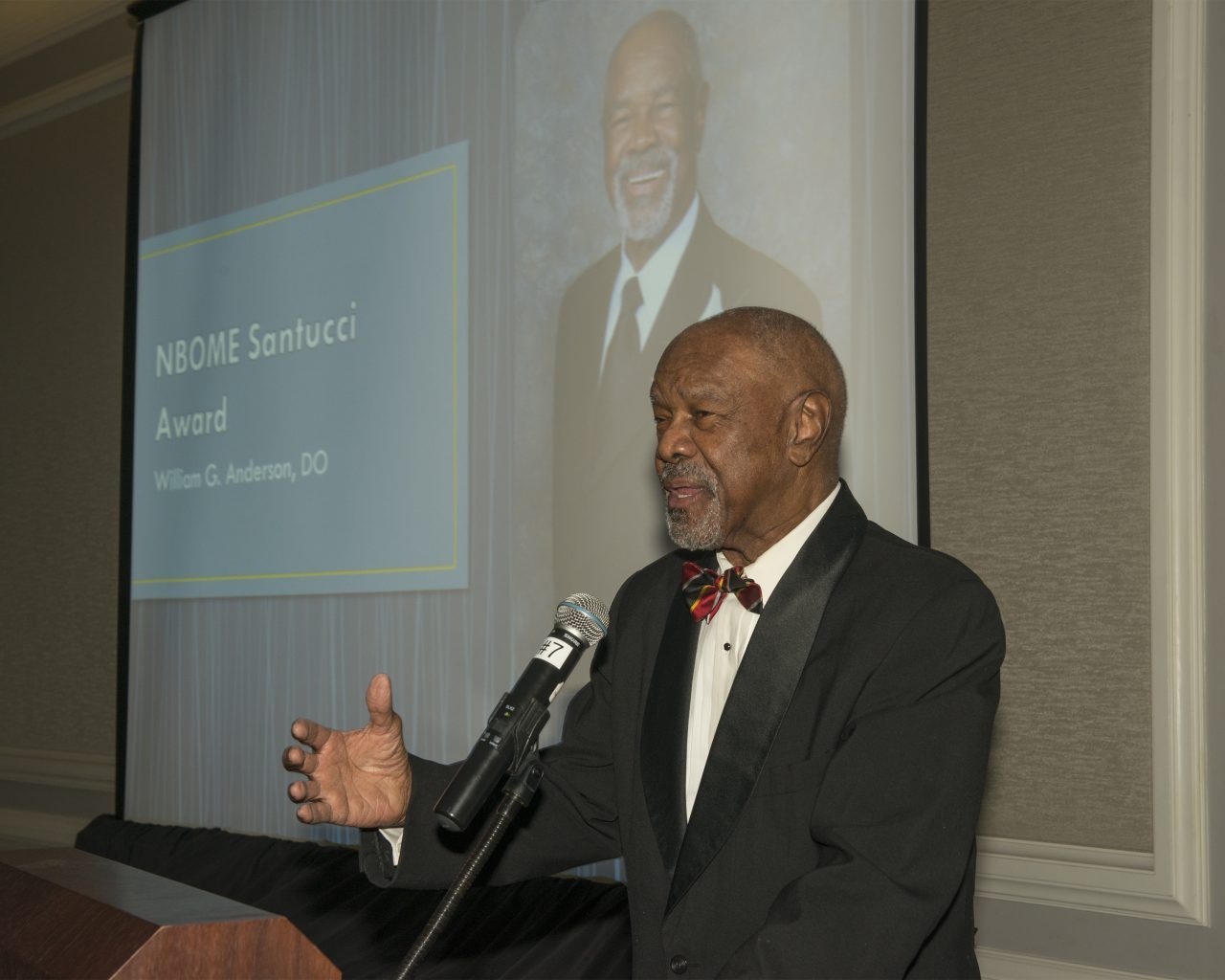
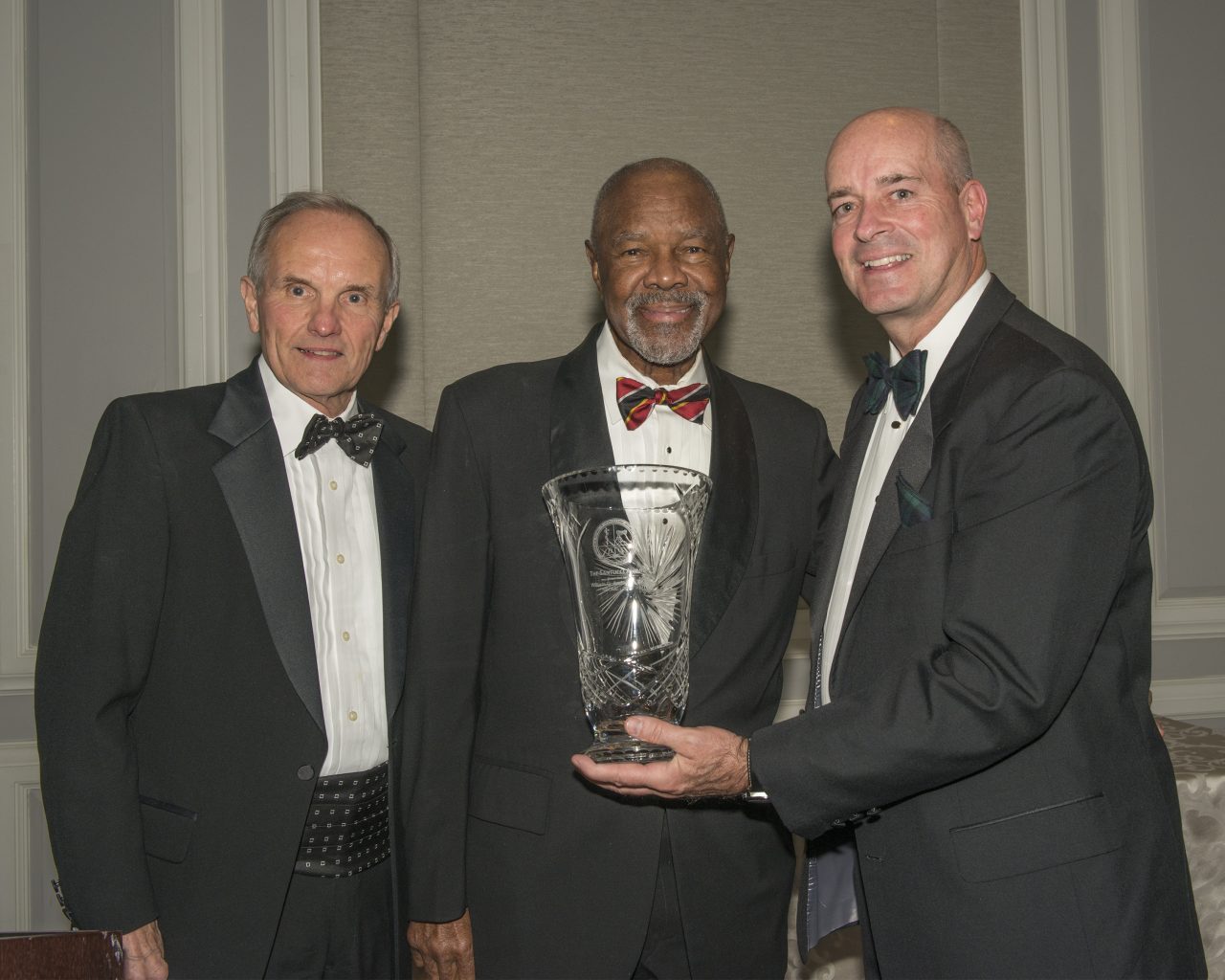
Anderson was elected to the NBOME Board of Directors in 2003 and served through 2014, including leading as a member of its Executive Committee from 2007 to 2010. When his final term concluded in 2014, NBOME’s glossary of acronyms— used in orienting new Board and staff, which he was instrumental in building, was named in his honor as, “The NBOME-Anderson Acronym Glossary.” We understand other osteopathic organizations have since adapted it for their own purposes. In 2016, Anderson was recognized with the Santucci Award, NBOME’s highest honor, for his sustained and momentous contributions to NBOME’s mission of protecting the public through assessment.
Anderson’s legacy lives on through the renowned Dr. William G. Anderson Lecture Series at Michigan State University and the American Osteopathic Foundation’s William G. Anderson, DO, Scholarship Fund, founded in 2001, which now awards up to 25 scholarships annually to minority osteopathic medical students. All profits from his 2025 autobiography go to the William G. Anderson DO Scholarship Fund.
“Bill lived a life defined by pride in where you came from, pride in who you are, and a commitment to becoming the best version of yourself—not someone else,” Gimpel said.
That spirit was perhaps best reflected in Anderson’s love for his family. The NBOME offers its sincere condolences to the Anderson family, including the five adult children of Bill and the late Norma Anderson—Laurita (“Rita”), Darnita, DO (“Dee-Dee”), William G., DO, (“Gil”), Vale, and Frank, DO—as well as their grandchildren and extended family. Remarkably, the Anderson family now includes eight DOs among children, grandchildren, and spouses. “Bill would always light up with pride and joy when he shared stories of his family legacy and their many successes,” Gimpel added.
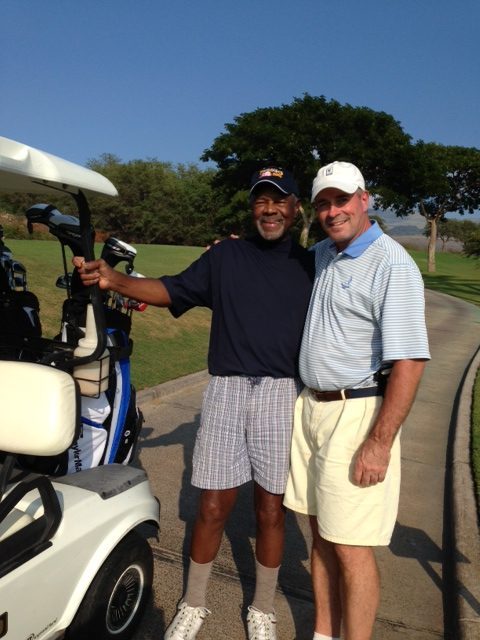
“I was so fortunate to have worked with Bill, played countless rounds of golf with him—(he loved Mulligans, disliked water hazards, and never lost any golf balls)—and learned from this true icon, whose impact on our world—and on so many of our lives—has been profound and enduring,” Gimpel said.
“Dr. Anderson left an indelible mark on our world through his steadfast commitment to service, his advocacy for those most in need, and his willingness to say “yes” whenever an opportunity arose to make a difference. His example will continue to shape the osteopathic medical profession, the NBOME, and all who had the privilege of knowing him, with an impact that will extend to generations of physicians and the patients they serve. Godspeed, Bill. Your life of service will continue to guide us.”